 English
 Español


Can Hose Connectors Handle High Pressure Cooling Systems
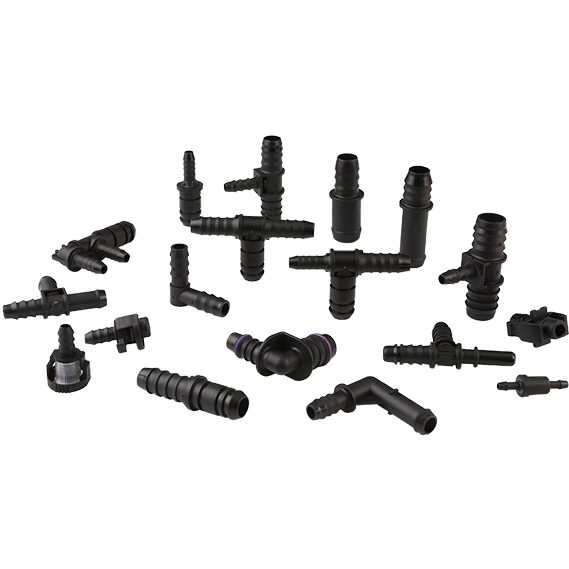
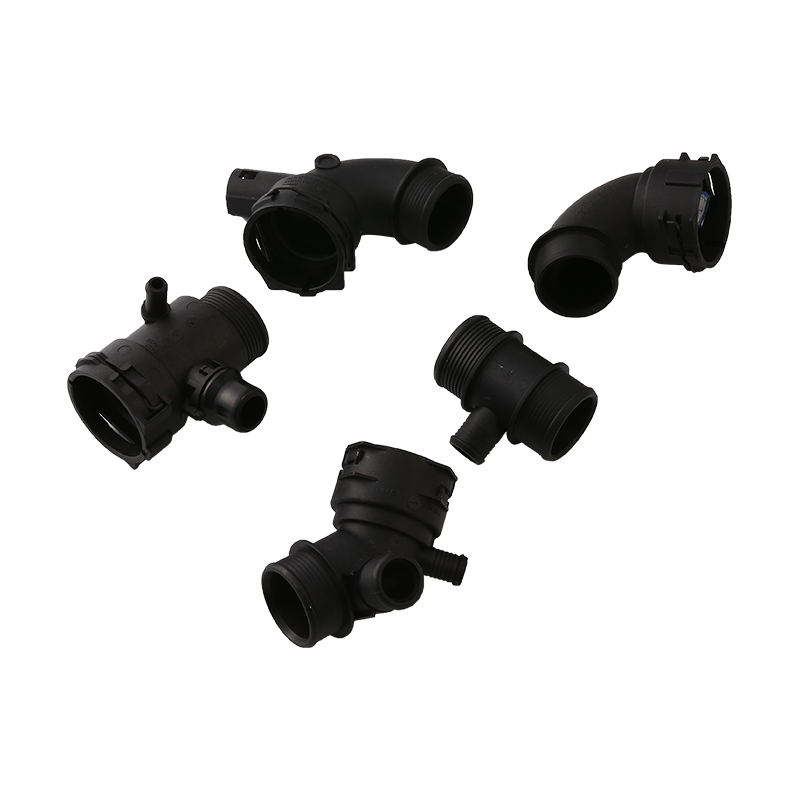
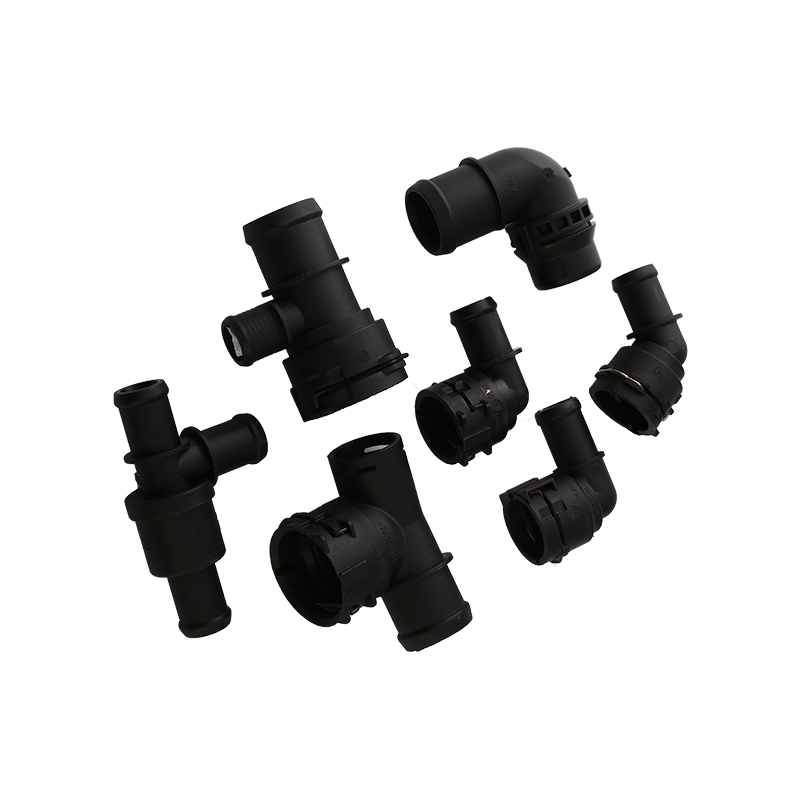
Automotive thermal management systems increasingly rely on Plastic Automotive Hose Fittings integrated with Hose Connector assemblies to manage coolant circulation under compact engine bay conditions. From a manufacturing and engineering standpoint at Linhai Alway Technology Co., Ltd., pressure tolerance is not a single-value parameter but a dynamic behavior influenced by temperature, pulsation, and installation geometry.
Real-world applications show that many systems operate under fluctuating rather than constant pressure, making evaluation more complex than static laboratory ratings.
1. Static Pressure vs Dynamic Pressure Reality
Laboratory pressure ratings often do not reflect real vehicle behavior.
Observed differences:
Static test pressure: steady load for short duration
Dynamic system pressure: continuous fluctuation with spikes
Typical automotive cooling systems experience:
Idle pressure stability
Mid-load pressure oscillation
Peak pressure surge during thermostat activation
A Hose Connector must maintain sealing integrity under all three conditions simultaneously.
2. Pressure Spike Behavior During Operation
Field data shows that pressure spikes often exceed nominal expectations briefly.
Common sources:
Rapid throttle changes
Coolant pump speed variation
Air pocket release in system
These spikes may last only seconds but are critical in evaluating connector reliability.
Engineering observations include:
Temporary seal deformation recovery
Micro-slippage at hose interface
Localized stress concentration at barb roots
3. Structural Design of Hose Barb Engagement
Performance of Plastic Automotive Hose Fittings depends heavily on barb geometry.
Key design factors:
Barb angle (typically 15°–30° range)
Ridge spacing consistency
Insertion depth control
Surface roughness optimization
At Linhai Alway Technology Co., Ltd., design optimization focuses on balancing insertion force with retention strength to avoid both leakage and hose damage.
4. Material Strength Under Pressurized Flow
Different polymer systems react differently under pressure:
PA66-GF30 → high rigidity, strong dimensional stability
PPS composites → nice heat + chemical resistance
Elastomer-enhanced blends → improved sealing adaptability
However, higher rigidity does not always equal better sealing. Excess stiffness can reduce micro-conformity at the interface.
5. Hose Expansion Contribution to System Load
The hose itself plays an equal role in pressure handling.
Observed behavior:
Radial expansion under pressure reduces clamp effectiveness
Elastic recovery introduces cyclic movement
Long hoses amplify pressure wave transmission
This means connector performance cannot be isolated from hose material selection.
6. Combined Pressure + Temperature Stress Effect
Pressure tolerance decreases as temperature increases.
Key effects:
Reduced modulus of elasticity in polymer fittings
Increased hose softness causes clamp relaxation
Accelerated fatigue at the sealing interface
Testing conducted at Linhai Alway Technology Co., Ltd. shows significant variation in sealing stability when thermal load is combined with cyclic pressure.
7. Installation Torque and Clamp System Influence
Pressure resistance is strongly affected by installation quality.
Critical factors:
Clamp torque consistency
Clamp positioning relative to barb zone
Hose cut surface condition
Improper clamp placement often results in premature leakage even under moderate pressure levels.
8. Field Application Patterns
Based on service environment analysis:
Passenger vehicles → moderate pressure stability, long lifecycle
Turbocharged engines → frequent pressure spikes, higher stress
Commercial vehicles → extended operating cycles, cumulative fatigue
Each category requires different connector reinforcement strategies.
9. Manufacturing Validation Approach
At Linhai Alway Technology Co., Ltd., validation includes:
Hydrostatic pressure cycling tests
Thermal-pressure combined aging simulation
Burst pressure verification under elevated temperature
Vibration-assisted pressure endurance testing
This ensures connectors are evaluated under realistic multi-factor conditions rather than isolated pressure tests.
High-pressure cooling system compatibility of Plastic Automotive Hose Fittings and Hose Connector assemblies depends on dynamic system behavior rather than static ratings alone. Pressure spikes, thermal expansion, hose elasticity, and installation precision all contribute to real-world performance.
Manufacturing optimization at Linhai Alway Technology Co., Ltd. continues to focus on integrated system reliability, ensuring stable performance across varying engine operating conditions.
.png)