 English
 Español


Why Do Coolant Fuel Hoses Fail at Clamps
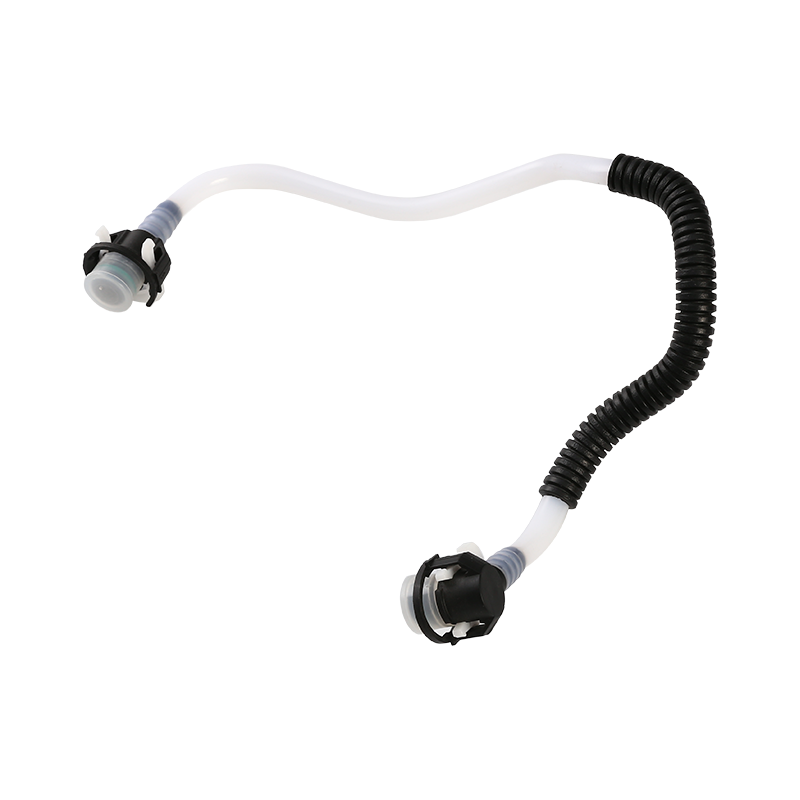
A clamp seems like the simplest part of any hose installation. Yet a large number of user-reported failures involving a fuel hose for coolant occur right at the clamp location — not in the middle of the hose, not at a bend, but precisely where the hose meets the metal fitting. One user posted on a social media mechanic group: “I tightened the clamp until it felt snug, but coolant still drips from the end of the hose.” Another asked: “Why does my Fuel Line Coolant Hose keep sliding off the water pump fitting even with a new clamp?”
These questions point to a deeper issue. Clamp failures are rarely about the clamp itself. They are about how a fuel hose behaves differently from a coolant hose when compressed, heated, and vibrated. Linhai Alway Technology Co., Ltd. has examined returned hoses from field failures, and clamp-area leaks are among the more common complaints.
1. Insufficient hose wall stiffness
A proper coolant hose has a wall construction that maintains roundness and resists cold flow under clamp pressure. Many fuel hoses, especially those designed for low-pressure fuel systems, have softer wall compounds. When a user installs a fuel hose for coolant and tightens a worm-drive clamp, the hose wall compresses unevenly. The clamp may feel tight, but the rubber underneath has squeezed away from the barb, leaving a spiral channel for coolant to escape.
One user described tightening a clamp on a Fuel Line Coolant Hose until the screw bottomed out. The hose still leaked. When removed, the hose showed a deep spiral impression from the clamp slots — the rubber had flowed into the clamp openings instead of sealing against the fitting. A coolant-rated hose with firmer construction would have maintained a uniform seal.
2. Wrong clamp type for the hose diameter
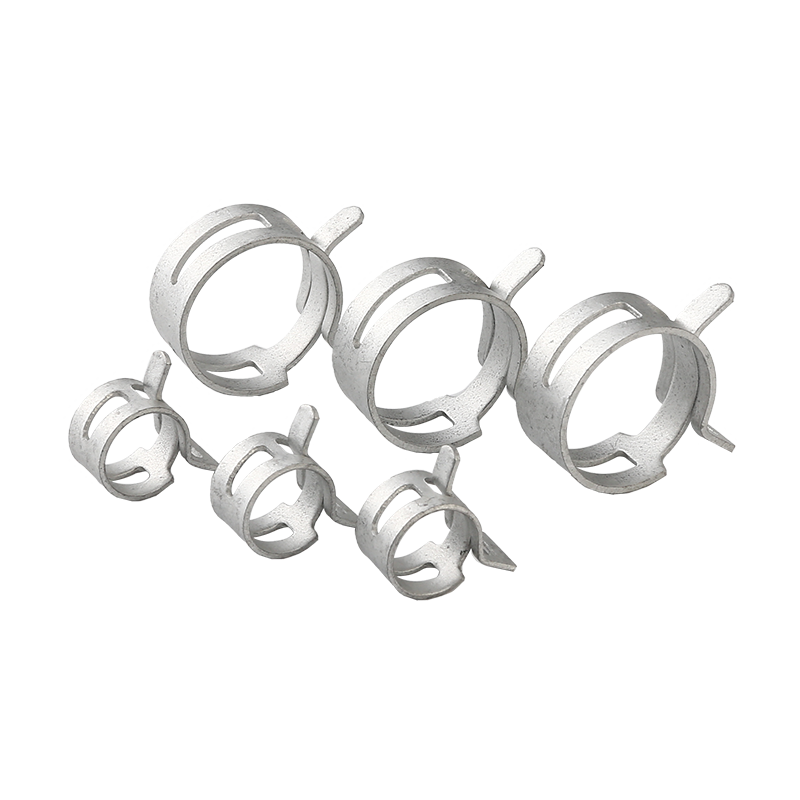
Not all clamps work well with all hoses. Spring clamps, wire clamps, screw clamps, and constant-tension clamps each apply pressure differently. A common user mistake is using a standard worm-drive clamp on a fuel hose for coolant that has a slightly smaller outer diameter than a coolant hose. The clamp tightens into an oval shape, creating high-pressure points on two sides and zero pressure on the other two sides. Coolant finds the gap.
A user asked online: “I used a 16–27mm clamp on my 15mm Fuel Line Coolant Hose. Why does it leak?” The answer was that the clamp’s lower limit diameter (16mm) was already larger than the hose’s outer diameter (roughly 21mm for a 15mm ID fuel hose). The clamp never made full contact. The correct clamp range should have been 12–20mm.
3. Barb design mismatch
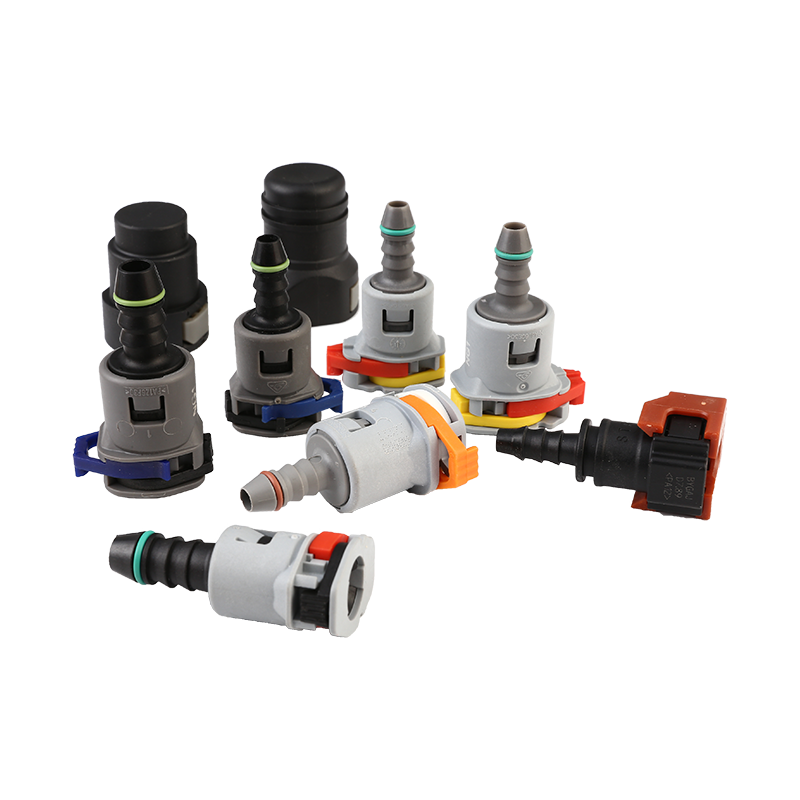
Coolant fittings on engines have barbs — raised ridges that grip the hose from the inside. These barbs are designed for coolant hoses with specific inner diameter tolerances and wall flexibility. A fuel hose for coolant often has a harder or slicker inner liner than a coolant hose. The barbs cannot bite into the liner effectively. One user reported that his Fuel Line Coolant Hose could be pulled off the fitting by hand even with the clamp fully tightened — the barbs had simply skidded across the liner surface instead of embedding into it.
4. Thermal expansion loosening
Rubber and metal expand at different rates when heated. A clamp that feels tight on a cold engine may become loose at operating temperature. This effect is more pronounced with fuel hoses because their thermal expansion coefficient differs from that of purpose-made coolant hoses. A user described checking his fuel hose for coolant installation in the morning — everything felt secure. After a 30-minute drive, he noticed a puddle under the car. The clamp had loosened just enough for coolant to weep past.
Re-tightening a hot clamp carries its own risk. Over-tightening a hot, softened hose can cut into the rubber or strip the clamp screw. Several users have shared photos of clamps that cut completely through a Fuel Line Coolant Hose after repeated hot-tightening attempts.
5. Vibration and hose movement
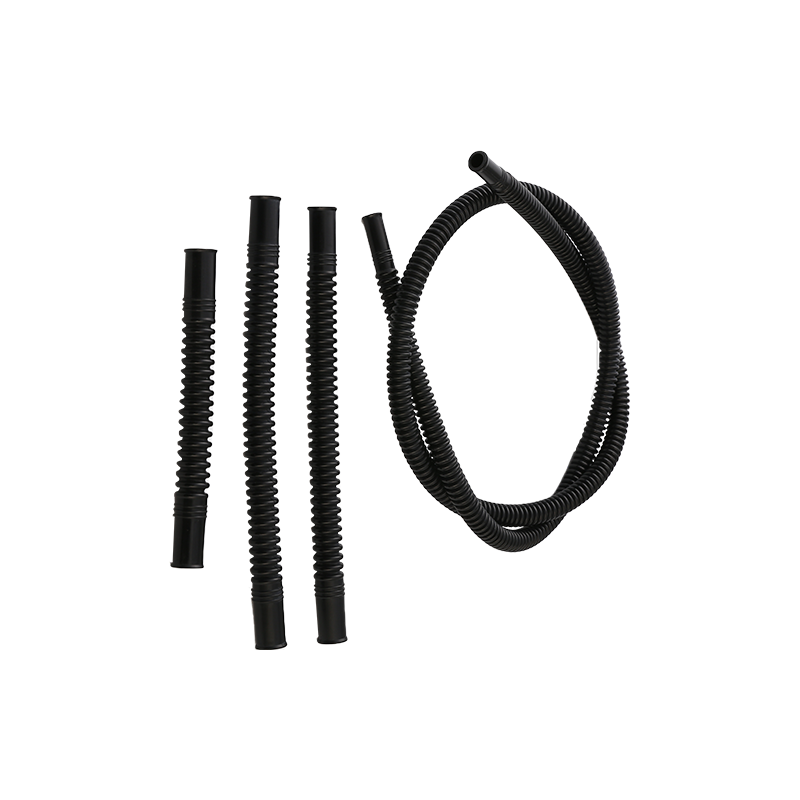
Engines vibrate. Coolant hoses flex with engine movement. A proper coolant hose has some flexibility built into its wall construction to absorb vibration without transferring all motion to the clamp joint. A fuel hose for coolant may be stiffer or less resilient. The vibration then concentrates at the clamp edge, where the hose rubs against the metal clamp band or the barb shoulder.
One user found that his Fuel Line Coolant Hose developed a crack exactly at the end of the clamp after three months of daily driving. The crack started on the inside surface and worked outward. The cause was micro-movement: the hose shifted back and forth on the barb with each engine vibration, and the clamp edge acted like a knife.
Practical observations from the field
Linhai Alway Technology Co., Ltd. suggests that any fuel hose for coolant installation intended to last more than a few days should be evaluated for three clamp-related factors:
- Clamp type matching the hose outer diameter range
- Barb condition (sharp barbs grip better than worn or rounded barbs)
- Double-clamping for high-vibration applications
Users who experience persistent clamp-area leaks with a Fuel Line Coolant Hose should not simply add more clamps or tighten further. The root cause is almost always a mismatch between the hose’s construction and the demands of a coolant system. Switching to a hose explicitly rated for coolant service — with appropriate wall stiffness, liner material, and thermal stability — is the only reliable solution.