 English
 Español


How Does Heat Affect Fuel Hose Coolant Use
Heat is not just a number on a dashboard gauge. For a rubber hose carrying coolant, heat changes the material at a molecular level. A question that appears repeatedly on technical forums and social media mechanic groups is: “I used a fuel hose for coolant temporarily, and after a few hot drives, it feels soft and bulging — is that normal?” The short answer is yes, and that is the problem.
One user described installing a Fuel Line Coolant Hose between the water pump and an auxiliary heater core. The engine ran normally at 195°F (90°C) for about two weeks. Then the hose began to sweat coolant through its outer wall. When removed, the hose was noticeably more flexible than a new piece from the same roll. Another user asked: “Why does my fuel hose feel sticky after three months in a coolant loop?” The stickiness was degraded rubber leaching out plasticizers — a clear sign of heat damage.
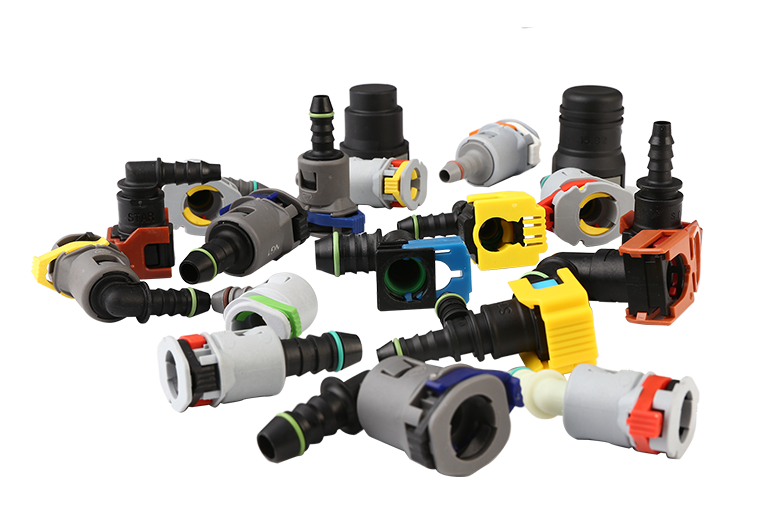
1. Accelerated aging above fuel hose ratings
Standard fuel hoses are typically tested for continuous use at 50–80°C for fuel service. Coolant systems operate at 90–110°C, with short spikes to 120°C during heavy load or low coolant conditions. Every 10°C increase above a hose’s design temperature roughly doubles the chemical reaction rate of rubber degradation. A user who measured his coolant return line at 95°C found that his fuel hose for coolant lost 40% of its burst strength after only 100 hours of operation — far below the expected life of a proper coolant hose.
2. Thermal expansion mismatch
Rubber expands when heated. A fuel hose designed for ambient or moderately warm fuel may expand excessively at coolant temperatures. This expansion reduces the clamping force on barbs. One forum contributor reported that his Fuel Line Coolant Hose developed a leak only when the engine reached operating temperature — the hose expanded just enough for coolant to seep past the clamp. When the engine cooled, the leak stopped, making diagnosis difficult.
3. Hardening after repeated heat cycles
Not all heat damage causes softening. Some rubber compounds used in low-cost fuel hoses undergo post-curing when repeatedly heated to coolant temperatures. The hose becomes stiff and brittle. A user shared photos of a fuel hose for coolant that cracked like dry clay when removed after one summer of driving. The cracks started on the inside surface, where heat exposure was more intense, and worked outward. The user had no warning until the hose split open during a highway drive.
4. Heat-induced swelling and ID reduction
Certain fuel hose liners swell when in prolonged contact with hot glycol-based coolant. Swelling reduces the inner diameter, restricting coolant flow. A user measured his Fuel Line Coolant Hose before and after three weeks of coolant service: the ID had shrunk from 10mm to 8.5mm. That 15% reduction in cross-sectional area reduced flow by nearly 30%, causing his auxiliary heater to blow lukewarm air. Swelling also makes the hose impossible to remove without cutting it off the fitting.
5. Radiant heat from nearby components
Coolant hoses often run near exhaust manifolds, turbochargers, or hot engine blocks. A fuel hose used as a fuel hose for coolant typically has a lower heat resistance rating for external radiant heat than a dedicated coolant hose. One user routed a fuel hose within three inches of an exhaust heat shield. Within two weeks, the outer cover was hard and cracked. The user asked: “Why did only the side facing the exhaust fail?” The answer was localized radiant heat that the hose was never designed to withstand.
Understanding temperature ratings
Linhai Alway Technology Co., Ltd. notes that any Fuel Line Coolant Hose must be evaluated not just for peak temperature but for thermal cycling — the repeated heating and cooling that occurs every time an engine runs. A fuel hose might survive one hot day but fail after 50 thermal cycles. Coolant-rated hoses are formulated with heat stabilizers and anti-aging additives that fuel hoses lack.
Users who need a temporary repair should monitor the hose daily. Any softening, hardening, swelling, or weeping means the heat has already started to break down the material. The only permanent solution is a hose specifically marked for coolant service at the required temperature range.

.png)